



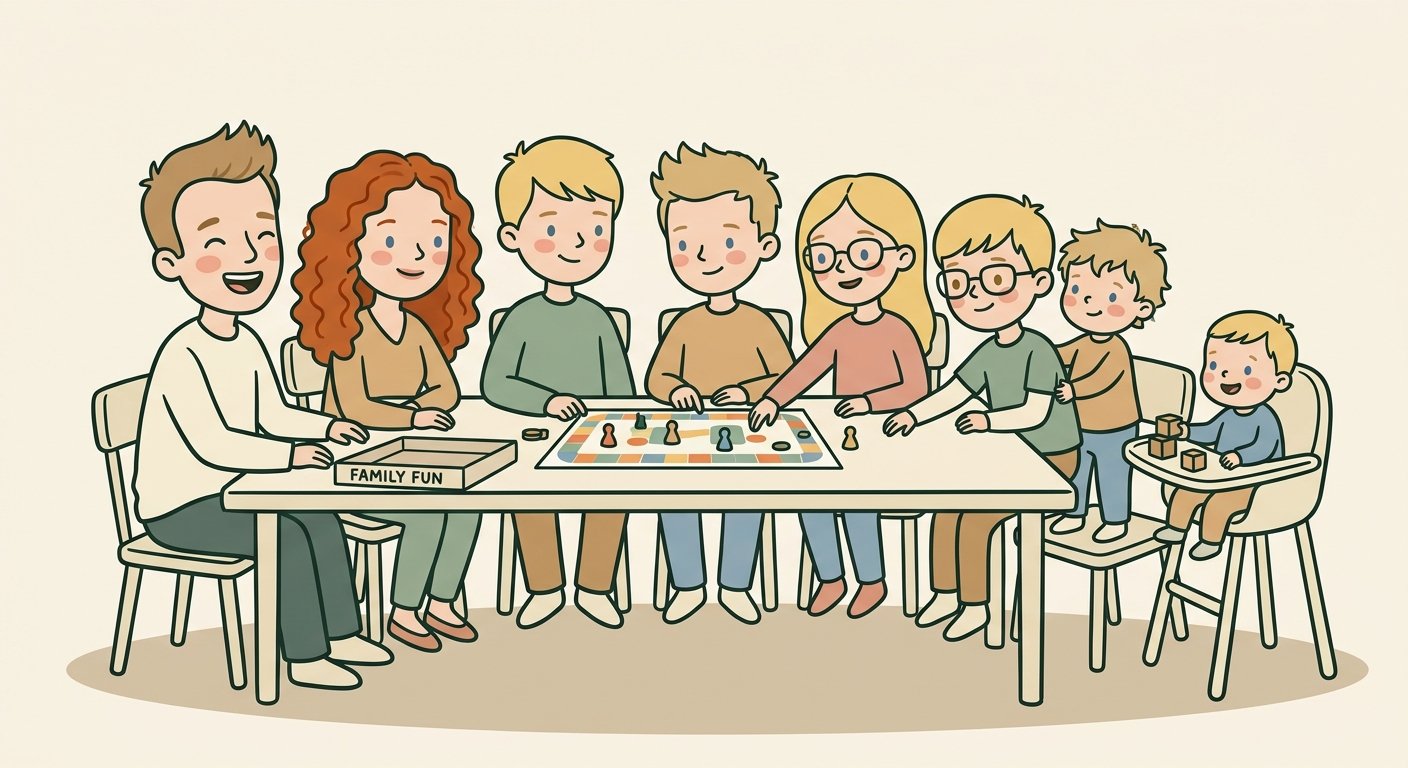
We didn’t set out to run a big family like a small business. We just got tired of the chaos.
With seven kids, from adults down to a toddler, we’ve learned that ordinary days run calmer when a few simple systems carry the load: agreements we write down together, consequences we decide on ahead of time, chores everyone can do, routines that get us through mornings, and weekly time with each child.
None of it is perfect, and we’re still adjusting. But it works, and it gives us more room for the things that matter. Start with the area that feels hardest in your home.
Phones, screens and family agreements
Screens are the thing most parents tell us they argue about. What has helped us is writing the expectations down together, so the agreement does the talking instead of a tired parent. Here is how we think about it.
- The Only Way to Charge a Phone in Our House
- Trading Screen Time for Moments That Truly Matter
- Screen Time Effects: What Parents Need to Know
- The Essential Parent-Teen Driving Agreement
We are putting our phone, screen and teen agreements into printable form. Join the free list and you will hear first.
Calm discipline, without the yelling
Kids test boundaries. It’s their job. What helps most is deciding on consequences ahead of time, so we can stay calm when the moment comes.
- How Pre-Teaching Transforms Parenting (and Prevents Meltdowns)
- The Power of Preplanned Consequences in Teaching Children
- What to Do When Kids Test Boundaries (Without Losing Your Cool)
- Download Your Free Consequence Chart for Effective Discipline
Chores everyone can do
Chores aren’t about a clean house. They’re how kids learn they belong to something bigger than themselves. These posts show how we get kids on board, match tasks to ages, and keep it simple enough to last.
- How to Get Kids Onboard with Chores (Without the Eye Rolls)
- Chores for Every Age: How to Teach Kids Age-Appropriate Tasks
- Why Family Chore Charts Foster Unity and Character in Your Home
- Simplifying Chores with Color-Coding: A Stress-Free Approach
- 10 Benefits of a Family Chore Chart for Large Households
- 5 Fun Tips to Get Kids Excited About Chores
Routines that carry the day
When the mornings and the house feel out of control, the answer is usually a rhythm, not more willpower. Here is how we keep a big house running.
- The Family Systems That Keep a Big House Running
- Feeling Out of Control? 5 Simple Morning Routines for Large Families
- Why Your House Feels Like It’s Falling Apart (And How to Fix It)
Mentoring each child
Our weekly one-on-one time is the best investment we make in our kids. These posts cover how to run a session, how it changes by age, and the pitfalls we’ve hit along the way.
- Why One-on-One Mentoring Transforms Family Relationships
- How to Run a Powerful Mentoring Session with Your Child
- Mentoring for Different Ages: Adapting to Your Child’s Growth
- Common Pitfalls in Mentoring (and How to Avoid Them)
- Unlock Your Potential: Free Download of Mentoring Sheets
- Mastering Independence: Download the 4 Basic Skills for Raising Self-Governing Kids
Chatter Batter Books for little learners
Our Chatter Batter picture books are stories for practicing sounds together, written for the kids at home and the grown-ups reading with them. These posts cover what to expect at each age.

- Understanding Speech Development: When Should Children Articulate Sounds?
- What Age Should Kids Say the L Sound?
- What Age Should Kids Say the TH Sound?
- What Age Should Kids Say the F Sound?
- What Age Should Kids Say the S Sound?
- What Age Should Kids Say the R Sound?
Want the printable versions of these tools, plus a short weekly note of encouragement? Join us below. It’s free.