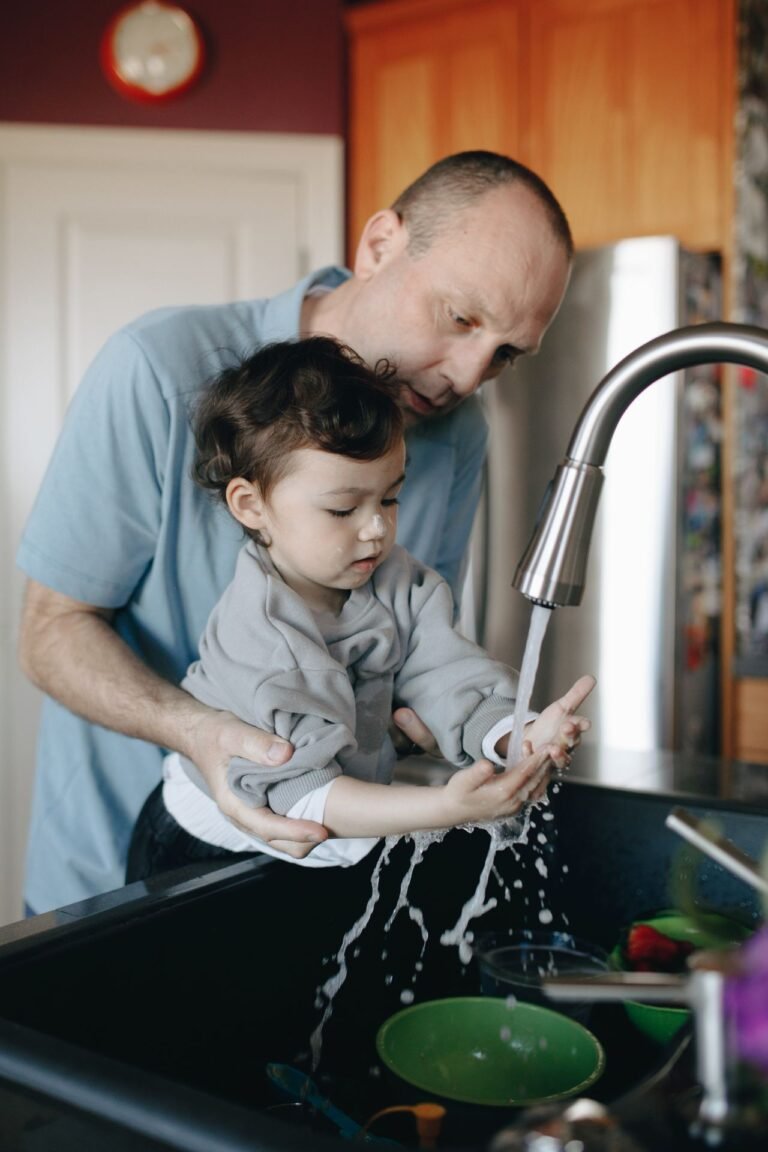




Nothing is wrong. Daytime and nighttime are different skills, and nights often take longer.
Dry nights were our main readiness signal, and it held for most of our kids. But dry nights before training is one thing. Dry nights after training is another.
Our second daughter was ready by day at barely two, but nights took a little longer. With most of our boys, nighttime accidents came back for a while once the weather cooled after we trained them in summer or fall. It was temporary.
What the pediatric sources say
The American Academy of Pediatrics (HealthyChildren.org) explains that control comes in stages.
This control usually develops during the daytime first; it takes more time before it happens at night.
American Academy of Pediatrics, HealthyChildren.org
The Mayo Clinic says, “Generally, bed-wetting before age 7 isn’t a concern. At this age, your child may still be developing nighttime bladder control.” And the AAP reports, “Around 20% of children have some problems with bedwetting at age 5, and up to 10% still do at age 7.”
You are in good company.

It isn’t their fault
The AAP is clear: “Family members and friends should not shame or punish the child.” Your child can’t make themselves stay dry in their sleep. What they can do is feel safe and loved. The Mayo Clinic puts it this way: “If your child continues to wet the bed, treat the problem with patience and understanding.”
If he wakes up wet, a calm “It’s okay. Let’s get you changed” is all he needs. That’s the same grace we write about in The Road Trip Accident.
What a night accident looks like at our house
Usually it’s a wet spot on the bed and a wet blanket. For the little ones, it’s often just a wet spot on their pajamas. We don’t make a big deal about it. We help our child wash up, change into dry clothes, and start the laundry. We share love and stories, and we make sure they know we love them. Having them help start the wash teaches good hygiene, with no lecture. They just learn this is something we handle together.
What helped us in the meantime
These are our own suggestions, not medical advice.
- Potty before bed, every night.
- Ease up on drinks close to bedtime. Several potty training guides suggest stopping two to three hours before bed.
- Protect the bed: a waterproof mattress cover, a towel for the early wet nights, and a spare set of sheets within reach make a wet night a two-minute job.
- Talk it through. Pull-ups didn’t work for our first and second sons during the day, but at night they agreed, after we talked about it, to wear them until they felt comfortable and dry, with a potty trip before bed.
- Wake your child no more than once. The AAP says, “Wake your child only once during the night to urinate, if necessary.”
When to talk with your pediatrician
If you have any worry, call. The Mayo Clinic suggests talking with your child’s doctor if your child still wets the bed after age 7, or starts wetting the bed after a few months of being dry at night, or if the wetting comes with pain when passing urine, being often extra thirsty, pink or red urine, hard stools, or snoring.
Nights are a separate finish line. You’ll get there. Days first. Nights later. Grace always.
Staying calm at 2 a.m. is its own kind of parenting. Embracing Calm Parenting is where we talk about how to lead your home without raising your voice.
Keep reading
- You’re Not Behind: When Is a Child Ready for Potty Training?
- The Potty Training Moments Nobody Warns You About
- What I Wish Other Dads Knew About Potty Training
Start with the free sample.
Our free 12-page sample includes a letter to Mom, our six principles, and two printables. The full book adds a whole chapter on nights, plus a Night Log printable.
Not medical advice. One family’s experience, shared with grace.